
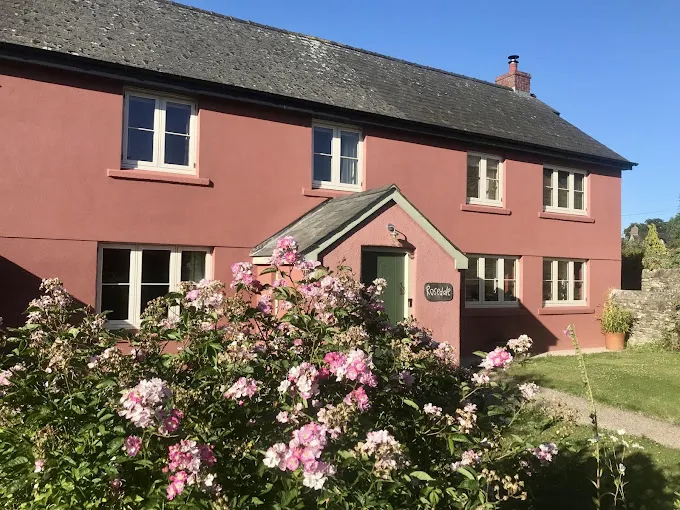
Expert External Rendering Ammanford Guide
External rendering Ammanford protects and transforms properties across Carmarthenshire – discover the best render systems, application methods, and how to choose the right specialist for your home or commercial building.
Table of Contents
- What Is External Rendering?
- Render Systems Suited to Ammanford Properties
- External Wall Insulation and Rendering in Ammanford
- Choosing the Right Rendering Specialist
- Frequently Asked Questions
- Render System Comparison
- Coloured Rendering South Wales
- Practical Tips for Ammanford Property Owners
- The Bottom Line
- Sources & Citations
Article Snapshot
External rendering Ammanford is the process of applying a protective and decorative coating to the outside walls of a property. Modern render systems including silicone, monocouche, and cement renders provide durable, low-maintenance finishes that defend Ammanford homes against rain, wind, and temperature fluctuation while enhancing kerb appeal.
External Rendering Ammanford in Context
- Ammanford has a population of approximately 5,400 residents, making it the third largest town in Carmarthenshire (Carmarthenshire County Council, 2025).[1]
- A gas-heated detached property fitted with external insulation and render saves £455 per year on fuel bills (Energy Saving Trust, 2025).[2]
- Solid walls lose heat at twice the rate of cavity walls, making external rendering with insulation a high-impact upgrade for older Ammanford properties (Energy Saving Trust via South Wales Rendering, 2025).[2]
- External insulation and render delivers average annual carbon dioxide savings of 1,900 kg per year on a detached property (Energy Saving Trust, 2025).[2]
What Is External Rendering?
External rendering Ammanford is the application of a protective mortar or polymer-based coating to the outside face of a building’s walls, forming a barrier against rain penetration, frost damage, and wind-driven moisture. The process improves both the structural integrity and the visual appearance of a property in a single operation, making it one of the most cost-effective upgrades available to homeowners and landlords across Carmarthenshire.
Ammanford sits in the Amman Valley, an area characterised by elevated rainfall and cold winters. Properties in this part of South Wales – particularly the substantial stock of pre-war terraced and semi-detached housing – are frequently built from solid masonry with little inherent weather resistance. Without a sound render coat, water ingress through porous brickwork or blockwork leads to damp internally, accelerating deterioration of mortar joints and internal finishes alike.
Coloured Rendering South Wales has been addressing exactly these challenges for property owners across the region since 1998, providing spray-applied and hand-applied render systems matched to local conditions. A well-specified external render does far more than improve appearances: it acts as the primary line of defence for the wall structure beneath, extending the serviceable life of the building envelope significantly.
Call Us
Modern renders differ substantially from the sand-and-cement coatings applied to many Welsh properties in previous decades. Today’s systems incorporate silicone polymers, acrylic resins, or through-coloured cement aggregates that provide flexibility, breathability, and resistance to algae and biological growth. For Ammanford homeowners dealing with the aftermath of failed older renders – cracking, spalling, or hollow patches – understanding the range of available systems is the essential starting point for any renovation decision.
Render Systems Suited to Ammanford Properties
The choice of render system for an Ammanford property depends on the substrate, the degree of weather exposure, the desired aesthetic, and the available budget. Three systems dominate the South Wales residential market: thin coat silicone render, monocouche through-colour render, and one coat cement render, each with distinct performance characteristics.
Thin Coat Silicone Render
Thin coat silicone render is the premium choice for exposed and coastal locations. Applied at approximately 1.5 mm texture finish (LMG Home Improvements Ltd, 2025)[3] over a reinforced basecoat, the silicone finish layer provides outstanding water repellency while remaining fully vapour-permeable. This combination – waterproof yet breathable – prevents moisture from being trapped within the wall structure, a critical attribute for solid-wall properties common throughout Ammanford’s older housing stock.
Silicone renders carry self-cleaning properties: the hydrophobic surface causes rainwater to sheet off rather than soak in, carrying surface dirt with it. In practice, this means a silicone-rendered facade maintains its appearance for years without repainting. The colour is integral to the product and does not fade, eliminating the cycle of external decoration that painted renders demand. As LMG Home Improvements Ltd notes, “Modern thin coat systems are designed to be able to be installed over the top of existing renders” (LMG Home Improvements Ltd, 2025)[3] – a practical advantage when full render removal would otherwise add significantly to project costs.
Monocouche Through-Colour Render
Monocouche render is a cement-based, single-coat system that is pre-coloured throughout its full thickness. Because the colour runs through the entire coat, minor surface scuffs or chips do not expose a contrasting grey core – the material looks the same throughout. This through-colouring means the finish never requires painting, delivering genuinely low maintenance over a service life measured in decades. Monocouche is available in a range of textures from fine scraped to coarser float finishes, suiting both contemporary new builds and traditional Welsh stone or brick properties. Coloured Rendering Swansea – durable and attractive rendering solutions for residential and commercial properties provides further detail on colour options across the product range.
One Coat Cement Render
One coat cement render remains a practical, cost-effective solution for properties where the owner intends to apply masonry paint in a chosen colour, or where budget constraints make the premium systems less viable. Modern one coat formulations use carefully graded aggregates and water-repelling additives that substantially improve on the performance of older sand-and-cement mixes. Applied using spray equipment, one coat cement render achieves a consistent thickness across the wall face, reducing the risk of shrinkage cracking that afflicts hand-applied coatings applied unevenly.
External Wall Insulation and Rendering in Ammanford
External Wall Insulation (EWI) combined with a rendered finish is the most thermally effective upgrade available for solid-wall properties in Ammanford, delivering simultaneous improvements to energy efficiency, comfort, and external appearance. Solid walls lose heat at twice the rate of cavity walls (Energy Saving Trust via South Wales Rendering, 2025)[2], and the majority of Ammanford’s pre-1930 housing stock falls into this higher heat-loss category.
An EWI system involves mechanically fixing high-performance insulation boards – typically mineral wool or expanded polystyrene – directly to the external face of the wall, followed by a reinforced render basecoat and a decorative finish coat. The insulation layer effectively wraps the building envelope, eliminating cold bridging at floor and wall junctions and dramatically reducing the rate of heat transfer through the fabric of the building.
“External Wall Insulation represents one of the most effective methods for improving thermal performance whilst simultaneously enhancing property appearance” (Coloured Rendering South Wales, 2025).[4] The financial case for EWI is well documented: the Energy Saving Trust reports that a gas-heated detached property fitted with external insulation and render saves £455 per year on fuel bills (Energy Saving Trust, 2025)[2], with average annual carbon dioxide savings of 1,900 kg per year (Energy Saving Trust, 2025).[2]
For Ammanford homeowners with solid-wall properties, EWI also improves the Energy Performance Certificate (EPC) rating of the property – a consideration that has become increasingly important for landlords required to meet minimum energy efficiency standards under UK regulations. The UK Building Regulations – Approved Documents set out the thermal performance standards that EWI installations must satisfy, and a certified installer will specify the insulation thickness required to achieve compliance. “Coloured Rendering South Wales brings over twenty-five years of rendering and insulation experience to External Wall Insulation projects throughout Ammanford” (Coloured Rendering South Wales, 2025).[4]
Choosing the Right Rendering Specialist in Ammanford
Selecting the right rendering contractor in Ammanford determines not only the quality of the finished surface but also the long-term performance of the system and the value for money achieved. Render failure – cracking, delamination, and water ingress – is almost always traceable to inadequate substrate preparation, incorrect product specification, or poor workmanship rather than to product failure itself.
Accreditation and Experience
For EWI projects, installer certification matters materially. A Baumit Approved EWI Applicator with City and Guilds Assured accreditation, for example, is certified to install Baumit StarTop premium silicone render and full EWI systems with manufacturer-backed warranties of up to 25 years. This documentation provides property owners with a formal guarantee that extends well beyond the contractor’s own assurances. When requesting quotes, ask specifically whether the contractor holds current manufacturer accreditation for the system they are proposing, and request documentation accordingly.
Local Knowledge and Specification
Ammanford’s position in the Amman Valley means properties experience a combination of high annual rainfall, occasional frost, and in some locations, elevated wind exposure. A contractor with deep local experience will specify render systems and primers appropriate to these conditions rather than applying a generic mainland specification. This includes selecting appropriate basecoat thicknesses, primer types, and finish products rated for high-exposure Welsh climates. About us – Learn more about our experienced team and rendering expertise explains how local knowledge informs every project specification.
Spray Application Versus Hand Application
Professional spray rendering equipment applies render at a consistent thickness and pressure across the entire wall face, producing a more uniform finish and eliminating the thin and thick spots that hand application creates. Spray application is also considerably faster: a project that might take four to five days by hand is completed in two days with spray equipment, reducing both scaffolding hire costs and disruption to occupants. For property developers managing multiple units or tight programme schedules across Ammanford developments, this efficiency difference is commercially significant. Rendering Repairs South Wales – professional repairs and maintenance for external wall renders covers the maintenance implications of different application methods.
Your Most Common Questions
How long does external rendering last on an Ammanford property?
The service life of external render depends primarily on the system specified and the quality of application. A properly applied thin coat silicone render installed over a correctly prepared and reinforced basecoat lasts 20 to 25 years or more without repainting or significant maintenance. Monocouche through-colour render has a comparable service life, with the advantage that its integral colour does not fade or chip to expose a contrasting layer beneath. One coat cement render systems, when correctly applied and painted with quality masonry paint, perform well for 10 to 15 years before redecoration is needed – though the underlying render itself remains structurally sound well beyond that point. In all cases, service life is extended by ensuring that gutters and downpipes are maintained to prevent water running over rendered surfaces, and that any minor cracks or gaps around windows and door frames are sealed promptly before water penetration begins. Ammanford’s high annual rainfall means these maintenance habits have a meaningful impact on render longevity.
What is the best render system for an older solid-wall property in Ammanford?
For pre-1930 solid-wall properties – which make up a large proportion of Ammanford’s housing stock – thin coat silicone render applied over an EWI system is the best-performing solution. The insulation layer addresses the fundamental thermal weakness of solid walls, which lose heat at twice the rate of cavity walls, while the silicone finish provides a breathable, hydrophobic surface that manages moisture movement appropriately for solid masonry construction. If EWI is not within budget, thin coat silicone render applied directly to the prepared wall – either over an existing sound render or directly onto the masonry – still provides significantly better weather resistance and breathability than traditional sand-and-cement systems. The key requirement for solid-wall properties is that the render system must be vapour-permeable: trapping moisture within the wall structure by applying an impermeable coating accelerates deterioration and causes damp problems internally. A specialist renderer with experience in South Wales solid-wall properties will specify the correct primer and system for the substrate type.
Do I need planning permission to render my house in Ammanford?
In most cases, applying render to a private dwelling in Ammanford does not require planning permission, as it falls within permitted development rights. However, there are important exceptions. If your property is a listed building, any alteration to the external appearance – including rendering – requires listed building consent from Carmarthenshire County Council, and in some cases planning permission as well. Properties within a conservation area face restrictions on changes to external materials or finishes. If you are installing an External Wall Insulation system, the increase in the building’s external footprint (typically 100 mm to 150 mm) needs to be considered at boundary lines, and if the property is in a conservation area, prior approval is needed. The safest approach is to contact Carmarthenshire County Council’s planning department before committing to work, or to ask your rendering specialist – who will be familiar with local requirements – to advise on your specific situation. Reputable contractors will flag potential planning considerations during the initial property assessment.
How much does external rendering cost in Ammanford?
External rendering costs in Ammanford vary according to the size of the property, the system chosen, the condition of the existing substrate, and whether scaffolding is required. One coat cement render is the most affordable option, while thin coat silicone render and monocouche systems sit at a higher price point due to material costs and the basecoat preparation required. EWI systems carry the highest upfront cost but deliver ongoing savings: at £455 per year in reduced fuel bills for a gas-heated detached property (Energy Saving Trust, 2025), the investment pays back within a defined period depending on insulation thickness and property size. Some Ammanford homeowners are eligible for government grant funding toward EWI installations under energy efficiency schemes targeting properties with solid walls or low EPC ratings – your rendering specialist can advise on current eligibility criteria. Always obtain at least three written quotes that specify the render system, preparation work included, and materials to be used, so that comparisons are made on a like-for-like basis.
Render System Comparison for Ammanford Properties
Selecting between render systems involves balancing upfront cost, long-term maintenance requirements, thermal performance, and aesthetic flexibility. The table below compares the three principal external rendering options for properties in Ammanford and the wider Carmarthenshire area across the factors most relevant to property owners.
| Render System | Maintenance Required | Weather Resistance | Thermal Benefit | Best Suited To |
|---|---|---|---|---|
| Thin Coat Silicone Render | Minimal – self-cleaning, no repainting | Excellent – hydrophobic and breathable | Moderate (high with EWI basecoat) | Exposed locations, coastal areas, renovation and new build |
| Monocouche Through-Colour Render | Low – no painting required, through-coloured | Good – weather-resistant cement formula | Low (render only) | New builds, housing developments, traditional and contemporary styles |
| One Coat Cement Render | Moderate – periodic repainting needed | Good – improved with water-repelling additives | Low (render only) | Budget-conscious projects, properties where colour flexibility is needed |
| EWI with Silicone Render Finish | Minimal – premium finish, no repainting | Excellent – full system including insulation | High – up to £455/year fuel saving[2] | Solid-wall properties, energy efficiency upgrades, landlords improving EPC ratings |
Coloured Rendering South Wales
Coloured Rendering South Wales has delivered expert plastering and external rendering services across South Wales since 1998, bringing over 25 years of hands-on experience to every project. Based in Swansea and operating throughout Carmarthenshire – including Ammanford and the Amman Valley – the team provides a full range of render systems from traditional one coat cement render through to premium thin coat silicone render and complete External Wall Insulation installations.
As a Baumit Approved EWI Applicator with City and Guilds Assured accreditation, we are certified to install Baumit StarTop premium silicone render and full EWI systems backed by manufacturer warranties of up to 25 years. This certification gives Ammanford property owners documented, long-term protection – not just the contractor’s word. Our spray rendering technology applies finishes faster and more consistently than traditional hand application, reducing project duration and scaffolding costs without compromising finish quality.
Clients consistently highlight the quality of workmanship and the professional, reliable approach. “With over 15 years in the building trade I have experienced several different plasterers all offering different styles and finishes. Geoff’s thin coat spray finish render would rival the best and I can’t recommend his team enough to someone thinking of using him.” – Keri Hopkins, Google Review
“We’re 100% happy and wouldn’t hesitate to recommend Jeff. His workmanship is excellent and we’re also very happy with the product he recommended to eradicate the penetrating damp and give our house a great new look and lease of life.” – Alistair Legge, Google Review
Whether you need a straightforward render coat for a Carmarthenshire terrace or a full EWI system to improve an energy-inefficient solid-wall property, we provide a free initial consultation and written quotation. Visit our Home page of Coloured Rendering South Wales – expert spray rendering and external wall insulation services across South Wales or contact us directly to discuss your Ammanford project. To see completed work, browse our Gallery – View examples of our high-quality spray rendering and repair work. Call Geoff on 07815 868070 or email geoff@colouredrenderingsouthwales.com to arrange a no-obligation property assessment.
Practical Tips for Ammanford Property Owners
Preparing thoroughly before committing to an external rendering project in Ammanford will protect your investment and help ensure the finished system performs as expected over its full service life.
Assess your substrate honestly. Before requesting quotes, inspect the existing render or masonry for hollow patches (tap the surface – a dull thud rather than a sharp knock indicates delamination), cracks wider than hairline, and any signs of active damp internally. This information helps the contractor specify the correct preparation work and avoids surprises once scaffolding is up.
Address water management before rendering. Render cannot compensate for failed gutters, blocked downpipes, or cracked sills that direct water onto wall surfaces. Ensuring all rainwater goods are sound and correctly discharging away from the building is a prerequisite for long render life in Ammanford’s wet climate.
Match the render system to your wall type. Solid masonry walls – the majority of Ammanford’s older housing stock – require breathable render systems. Applying a low-permeability coating to a solid wall traps moisture within the masonry, accelerating frost damage and internal damp. Discuss your wall construction explicitly with your renderer at the quotation stage.
Ask about accreditation for EWI projects. If you are investing in External Wall Insulation, request evidence of the installer’s manufacturer certification. Accredited installers offer manufacturer-backed warranties that provide genuine long-term security for a significant financial investment.
Consider the whole system. Render systems include primer, basecoat, mesh reinforcement, and finish coat – not just the visible surface. A low quotation that omits essential preparation layers or specifies incompatible products will result in premature failure. Request a written specification listing all products and preparation steps so that competing quotes can be compared fairly.
Plan around weather windows. Render should not be applied in frost conditions or when rain is forecast within the curing period. In Ammanford, spring and early autumn provide the most reliable weather windows for external rendering work. Discuss scheduling with your contractor and agree on a weather policy before the project begins.
The Bottom Line
External rendering Ammanford is one of the most effective investments a property owner in Carmarthenshire can make – protecting the building fabric from the region’s high rainfall, improving thermal performance, and refreshing the external appearance in a single project. The right render system, correctly specified for Ammanford’s solid-wall housing stock and elevated weather exposure, will perform reliably for two decades or more with minimal maintenance.
Choosing a contractor with documented local experience, appropriate manufacturer accreditation, and a track record of verified client satisfaction removes the principal risk from the equation. Whether your priority is weather protection, energy savings of up to £455 per year, or a fresh exterior finish that adds lasting kerb appeal, the starting point is a detailed, no-obligation property assessment.
Contact Coloured Rendering South Wales today on 07815 868070, email geoff@colouredrenderingsouthwales.com, or use the Contact Coloured Rendering South Wales for a free quote or consultation on your rendering project page to arrange your free assessment.
Sources & Citations
- Ammanford Town Centre. Carmarthenshire County Council.
https://www.carmarthenshire.gov.wales/business/development-and-investment/town-centres/ammanford/ - Rendering in Ammanford – South Wales Rendering. South Wales Rendering.
https://www.southwales-rendering.co.uk/rendering-in-ammanford/ - Rendering External Walls Ammanford. LMG Home Improvements Ltd.
https://lmghomeimprovements.co.uk/rendering-external-walls-ammanford/ - Expert EWI Specialists Ammanford. Coloured Rendering South Wales.
https://www.colouredrenderingsouthwales.com/ewi-specialists-ammanford/