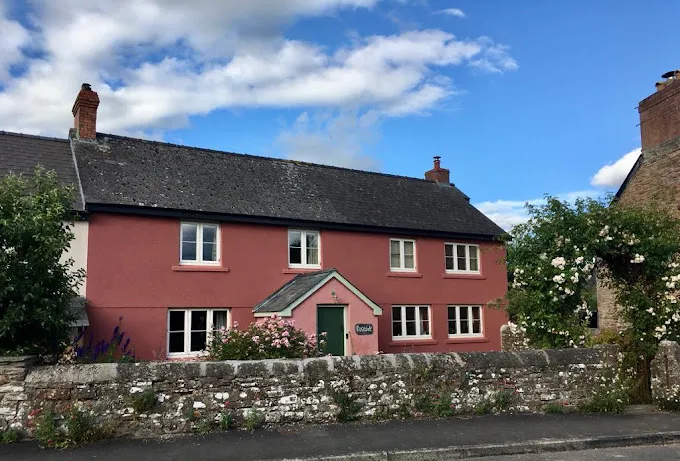

Energy Efficient Rendering Bridgend: Full Guide
Energy efficient rendering Bridgend homeowners and developers need combines thermal protection with weather-resistant external finishes – discover how the right render system can cut heating bills and meet modern building standards.
Table of Contents
- What Is Energy Efficient Rendering?
- How Render Systems Improve Thermal Performance
- Bridgend’s Energy Efficiency Landscape
- Choosing the Right Render System for Your Property
- Frequently Asked Questions
- Comparing Render System Options
- Coloured Rendering South Wales
- Practical Tips for Property Owners
- The Bottom Line
Quick Summary
Energy efficient rendering Bridgend is the application of insulated or thermally enhanced render systems to external walls, reducing heat loss and lowering energy bills. Combined with external wall insulation, these systems cut heating costs by 30-50% while improving a property’s EPC rating and protecting it from the Welsh climate.
By the Numbers
- 70% of new domestic properties in Bridgend received an EPC rating of A or B in July-September 2025 (UK Government, 2025)[1]
- 30-50% reduction in heating costs achieved through external wall insulation (Coloured Rendering South Wales, 2025)[2]
- £2.8 billion in capital investment is projected to decarbonise Bridgend’s local energy system by 2038 (Bridgend County Borough Council, 2021)[3]
- Median EPC score of 83 (band B) recorded in Pen-dre, Litchard, and Coity areas of Bridgend in 2024 (Office for National Statistics, 2024)[4]
What Is Energy Efficient Rendering and Why Does It Matter in Bridgend?
Energy efficient rendering Bridgend refers to external wall render systems – particularly those applied over insulation boards – that reduce a building’s rate of heat loss through solid or cavity walls. Unlike standard decorative render, thermally enhanced render systems work as part of a complete external wall insulation (EWI) assembly, trapping warm air inside the building while blocking wind-driven rain and moisture. Coloured Rendering South Wales has been delivering these systems across Bridgend and the wider South Wales region since 1998, helping property owners address rising energy costs with durable, professionally finished solutions.
Bridgend properties face a particular combination of challenges. The borough sits between the Vale of Glamorgan and the South Wales valleys, exposing buildings to high annual rainfall, prevailing south-westerly winds, and temperature fluctuations that accelerate heat loss through uninsulated walls. Older solid-wall properties – including Victorian and Edwardian terraces common throughout Bridgend town, Maesteg, and Pencoed – cannot benefit from cavity wall insulation and historically have been difficult to retrofit. External render-based insulation systems resolve this by adding both thermal performance and weatherproofing in a single installation.
The energy efficiency case for rendered wall insulation is well supported locally. In areas including Pen-dre, Litchard, and Coity within Bridgend, the median EPC score reached 83 – band B – as of 2024 (Office for National Statistics, 2024)[4]. This benchmark reflects growing investment in fabric-first energy improvements, of which external rendering plays a central role. For properties falling short of band B, an EWI render system is often the most cost-effective route to closing the gap.
Call Us
Grant Prosser, Construction Manager at Wales & West Housing Association, has noted the human dimension of this challenge: “A lot of our residents on low incomes struggle with increasing energy bills and are living in fuel poverty. The families and individuals moving into these homes can expect a significant drop in their bills.” (Wales & West Housing Association, 2025)[5] That reality applies equally to private homeowners across Bridgend seeking practical ways to reduce household running costs through building fabric improvements.
How Render Systems Improve Thermal Performance
A thermally enhanced render system improves a property’s energy performance by reducing the U-value of its external walls – the lower the U-value, the less heat escapes through the structure. In a full external wall insulation system, rigid insulation boards are mechanically fixed to the existing wall, followed by a reinforced base coat embedded with glass fibre mesh, and then a decorative finish render applied by spray or hand. The render itself is not the sole insulator; it forms the weather-resistant outer skin that protects the insulation layer and contributes to overall system performance.
Silicone render is the preferred finish for EWI systems in South Wales because it is simultaneously waterproof and breathable. This matters enormously in Bridgend’s climate, where persistent rainfall saturates wall surfaces. A non-breathable render traps moisture within the wall assembly, leading to interstitial condensation and potential insulation degradation. Silicone-based systems allow water vapour to pass outward while preventing liquid water from penetrating inward, preserving both the insulation and the structural wall beneath.
Thermal Bridge Reduction and Detailing
Effective thermally insulated rendering requires careful detailing at junctions – around windows, doors, roof eaves, and at the base of walls. Thermal bridges at these points undermine system performance significantly, allowing cold spots that lead to condensation and mould internally. Professional installers account for these junctions during specification, using appropriate corner beads, window reveals, and starter tracks to maintain thermal continuity across the entire wall area. This level of detailing separates a properly installed EWI render system from a basic cosmetic render applied over an existing substrate.
Monocouche through-colour render, applied without an underlying insulation layer, also contributes to thermal performance improvements compared with cracked or failed existing render. A sound, continuous render coat eliminates air infiltration through render defects – a commonly overlooked source of heat loss in older Bridgend properties. Where full EWI is not immediately feasible, upgrading to a quality monocouche system is a practical intermediate step that improves both weatherproofing and energy retention. For properties where a full insulated system is appropriate, you can explore our EWI Specialists South Wales – expert external wall insulation installations for energy efficiency service page for full technical details.
Spray application of render finish coats produces more consistent thickness across the wall surface than hand application, which is directly relevant to thermal performance. Inconsistent render thickness creates localised weak points where heat transfer rates vary, reducing the effectiveness of the insulation beneath. Professional spray application ensures the finish coat meets its specified thickness across the entire elevation, maintaining the system’s rated thermal performance.
Bridgend’s Energy Efficiency Landscape and Local Drivers
Bridgend County Borough Council has set ambitious targets for reducing carbon emissions across its built environment, and the scale of investment required underlines how seriously the local authority treats building fabric improvement. Decarbonising Bridgend’s local energy system by 2038 is projected to require capital investment of up to £2.8 billion (Bridgend County Borough Council, 2021)[3], with building retrofit – including external wall insulation and improved render systems – forming a core element of that programme.
The council’s approach to new and existing buildings reflects national Welsh Government policy, which requires higher fabric efficiency standards than standard UK building regulations. Bridgend’s own planning and energy assessment documentation states the requirement to “require higher building fabric efficiencies than current building regulations and ensure these are met by requiring strong monitoring following construction” (Bridgend County Borough Council, 2019)[6]. For property owners and developers in the borough, this signals that fabric-first energy improvement – starting with the external wall – is the expected direction of travel for both new build and retrofitted properties.
EPC Ratings and Property Value in Bridgend
An improved EPC rating has tangible financial implications for Bridgend property owners. Landlords are already required to meet minimum EPC standards for rental properties, and proposed future tightening of these requirements will push the threshold higher. Homeowners selling their properties face increasing buyer scrutiny of energy ratings, with lower-rated homes taking longer to sell and achieving lower prices in comparable markets. Investing in energy efficient rendering that improves a property’s EPC band from D or E to C or above protects both its market value and its attractiveness to quality tenants.
New domestic properties in Bridgend are already performing strongly: 70% received an EPC rating of A or B in the quarter to September 2025 (UK Government, 2025)[1]. This raises the competitive bar for existing housing stock. Older properties without external wall insulation that still carry D or E ratings are increasingly disadvantaged relative to new builds, making retrofit render-based insulation systems a practical response to a changing market. The UK Building Regulations Approved Documents provide the technical framework within which EWI and render specifications must comply, and a qualified installer will ensure every system meets these requirements.
Grant Prosser of Wales & West Housing Association has also noted the broader challenge: “The challenge for the housing industry is to reach the zero-carbon target by 2050. In the past some of the technologies used in the design of zero carbon homes has not been practical or easy to use.” (Wales & West Housing Association, 2025)[5] External wall insulation with silicone render finish is notable precisely because it is both proven and straightforward to install on the vast majority of existing Bridgend property types, without requiring complex mechanical systems or specialist occupant behaviour changes.
Choosing the Right Render System for Your Bridgend Property
Selecting the correct render system for a Bridgend property requires matching product type, application method, and substrate condition to the specific building and its location. There is no single universal solution – a Victorian terrace in Bridgend town centre has different requirements from a 1970s semi-detached in Pencoed or a coastal property exposed to salt-laden air near Porthcawl.
Thin coat silicone render is the most widely recommended finish for EWI systems in South Wales. Its flexibility accommodates minor substrate movement without cracking, which is important on older solid-wall buildings where some settlement and thermal expansion occurs. The self-cleaning properties of silicone formulations keep surfaces looking fresh in South Wales’s wet climate without requiring repainting – a significant long-term maintenance saving for Bridgend homeowners who would otherwise face regular external decoration costs. You can see the results of completed projects across similar property types in our Gallery – View examples of our high-quality spray rendering and repair work.
When Monocouche or Cement Render Is Appropriate
Where cavity wall insulation is already in place or the property has good existing thermal performance, monocouche through-colour render provides an excellent upgrade to the weatherproofing layer without requiring full EWI. Applied as a single coat, monocouche is coloured throughout its thickness, eliminating the need for painting and providing a durable, professional finish suited to the south-westerly weather exposure common across Bridgend. One coat cement render remains a practical choice where budget is the primary constraint and a painted finish is acceptable – its familiar cement matrix delivers proven durability at a lower material cost, with the option to update colour through repainting as preferences change.
Substrate assessment is important before any render system is specified. Failed, hollow, or contaminated existing render must be removed before new material is applied, regardless of system type. Applying new render over defective existing coats is the most common cause of premature render failure in South Wales properties, and it invalidates system warranties. A thorough survey of the existing wall – checking for hollow spots by tapping, assessing moisture content, and identifying any structural movement – should precede every specification decision. Energy savings from external wall insulation range from 30-50% reduction in heating costs, depending on the property’s existing thermal performance (Coloured Rendering South Wales, 2025)[2]. For properties with failed or damaged render that need repair rather than full replacement, our Rendering Repairs South Wales – professional repairs and maintenance for external wall renders service covers targeted solutions that restore weatherproofing efficiently.
Your Most Common Questions
What is the difference between EWI render and standard external render?
Standard external render is applied directly to the existing wall substrate and primarily provides weatherproofing and aesthetic improvement, with minimal thermal benefit beyond sealing air gaps. External wall insulation (EWI) render is applied over a layer of rigid insulation board – typically expanded polystyrene (EPS) or mineral wool – fixed to the wall surface. The insulation board is the component that significantly reduces the wall’s U-value and improves thermal performance. The render finish in an EWI system serves as the weather-resistant protective outer skin rather than the primary insulator. In Bridgend, where many properties have solid walls with no cavity, EWI render systems are the most effective retrofit route for meaningful energy efficiency improvement. A standard render upgrade without insulation will still improve weatherproofing and close air infiltration gaps, offering modest energy benefits, but it cannot match the thermal uplift achievable with a full insulated system. The choice between the two depends on the property’s existing thermal performance, budget, and long-term goals.
How long does an EWI render system last on a Bridgend property?
A properly specified and installed EWI render system lasts 25-30 years or more when maintained appropriately, with manufacturer-backed warranties covering 10-25 years depending on the system and installer accreditation. Silicone render finishes are particularly durable in South Wales’s wet climate because their hydrophobic properties prevent moisture absorption and the biological growth – algae and lichen – that degrades less resistant finishes. Systems installed by Baumit Approved Applicators, for example, carry the full Baumit manufacturer warranty, providing documented protection against system failure. The longevity of an EWI render system depends on correct substrate preparation, adherence to manufacturer specifications during installation, and attention to detailing at junctions and penetrations. Poorly detailed or incorrectly specified systems fail within a decade, through water ingress at weak points. Routine inspection – particularly after severe storms – allows early identification of any sealant or detailing issues before they develop into larger problems. With proper installation and occasional maintenance, the thermal and aesthetic benefits of an EWI render system represent a genuinely long-term property improvement.
Does energy efficient rendering require planning permission in Bridgend?
In most cases, applying external render or an EWI system to a residential property in Bridgend falls within permitted development rights and does not require planning permission, provided the property is not in a designated conservation area and is not a listed building. However, properties within Bridgend’s conservation areas – which include parts of Bridgend town centre and some older residential streets – require planning consent for external alterations that change the character or appearance of the building. Listed buildings always require listed building consent before any EWI or external render work proceeds. It is the property owner’s responsibility to verify planning requirements before commissioning work, and a reputable installer will raise this check as part of their pre-project assessment. For EWI systems specifically, building regulation approval is also required, particularly for thermally significant alterations, to ensure compliance with Part L of the Building Regulations covering energy efficiency. Your installer should be able to advise on both planning and building regulation requirements for your specific property and location within Bridgend County Borough.
Can render improve a property’s EPC rating enough to affect its market value?
Yes – external wall insulation with a render finish is one of the most impactful single measures available for improving the EPC rating of older solid-wall properties in Bridgend. Upgrading from an uninsulated solid wall to an EWI system moves a property from EPC band E or D into band C or above, depending on the property’s other characteristics such as heating system, roof insulation, and glazing. A move of one or two EPC bands has measurable effects on market value and sale speed in the current Welsh property market, where buyers and mortgage lenders pay increasing attention to running costs and energy performance. For landlords, meeting or exceeding the minimum EPC threshold for rental properties avoids enforcement action and supports higher achievable rents. The combination of reduced heating bills – potentially 30-50% lower (Coloured Rendering South Wales, 2025)[2] – and improved EPC band means the investment in energy efficient rendering repays itself through both running cost savings and enhanced capital value over time.
Comparing External Render System Options for Energy Efficiency
Selecting the right render system for a Bridgend property involves weighing thermal performance, maintenance requirements, upfront cost, and suitability for the existing substrate. The table below compares the four principal render system approaches available to property owners in the area, helping you identify which option best matches your priorities and building type.
| System Type | Thermal Improvement | Maintenance Requirement | Typical Lifespan | Best Suited To |
|---|---|---|---|---|
| EWI with Silicone Render | High – significant U-value reduction (30-50% heating cost savings)[2] | Very low – self-cleaning, no repainting | 25-30+ years | Solid-wall properties, fuel poverty reduction, EPC uplift |
| Monocouche Through-Colour Render | Moderate – seals air gaps, improves weatherproofing | Low – through-coloured, no painting needed | 20-25 years | Cavity-walled properties, new builds, aesthetic upgrade |
| Thin Coat Silicone Render (without EWI) | Low-moderate – weatherproofing only | Low – hydrophobic, self-cleaning | 20-25 years | Properties with existing insulation needing finish renewal |
| One Coat Cement Render | Low – seals surface, minimal thermal benefit | Medium – requires periodic repainting | 15-20 years | Budget-conscious projects, painted finish preference |
Coloured Rendering South Wales: EWI and Render Specialists in Bridgend
Coloured Rendering South Wales has served property owners across Bridgend, Swansea, Cardiff, and the wider South Wales region since 1998, building over 25 years of experience in both traditional and modern render systems. For energy efficient rendering Bridgend projects specifically, the company offers the full range of solutions – from EWI installations with silicone render finish through to monocouche, one coat cement render, and targeted rendering repairs. As a Baumit Approved EWI Applicator with City & Guilds Assured accreditation, the company is certified to install Baumit StarTop premium silicone render and complete EWI systems with manufacturer-backed warranties of up to 25 years.
Clients across Bridgend benefit from the company’s deep knowledge of local conditions – the exposed south-westerly aspects, high annual rainfall, and the specific substrate challenges common in the borough’s older housing stock. Spray application technology means projects are completed faster than with traditional hand methods, reducing disruption to occupants while maintaining consistent render thickness and finish quality across entire elevations.
“We’re 100% happy and wouldn’t hesitate to recommend Jeff. His workmanship is excellent and we’re also very happy with the product he recommended to eradicate the penetrating damp and give our house a great new look and lease of life.” – Alistair Legge, Google Review
“With over 15 years in the building trade I have experienced several different plasterers all offering different styles and finishes. Geoff’s thin coat spray finish render would rival the best and I can’t recommend his team enough to someone thinking of using him.” – Keri Hopkins, Google Review
The company’s maintained 5.0 Google rating across numerous independent reviews reflects the consistent quality of finished work and client communication. Whether you need a full EWI render system to improve an older Bridgend solid-wall property or a targeted repair to restore an existing render, the team provides free consultations to assess your property and recommend the most appropriate solution. Visit the Home page of Coloured Rendering South Wales – expert spray rendering and external wall insulation services across South Wales for an overview of the full service range, or Contact Coloured Rendering South Wales for a free quote or consultation on your rendering project to arrange a no-obligation property assessment.
Practical Tips for Bridgend Property Owners Considering Energy Efficient Rendering
Acting on the right information before commissioning render work saves both money and time. These practical guidelines apply specifically to properties in Bridgend and the surrounding area.
Commission a proper substrate survey first. Before accepting any quotation, ask the installer to carry out a tap test across the existing render and assess moisture content with a meter. Any hollow, delaminating, or wet sections must be addressed before new render is applied. Skipping this step is the primary cause of EWI and render system failure within the first few years.
Check installer accreditation. For EWI systems, verify that your contractor holds certification from the relevant manufacturer – Baumit, Weber, Sto, or similar – and that they carry appropriate public liability insurance. Accredited installers access manufacturer-backed warranties that uncertified contractors cannot offer. The Property Care Association provides guidance on standards for external wall work and helps you understand what to look for in a reputable contractor.
Specify silicone render for exposed locations. Properties on west-facing elevations in Bridgend, or within a few miles of the coast near Porthcawl, should specify silicone or silicone-silicate render finishes rather than acrylic. The enhanced hydrophobic properties and vapour permeability of silicone systems make them significantly better suited to persistent wind-driven rain conditions than acrylic alternatives.
Address thermal bridging at the design stage. Ask your installer to detail how they will handle window reveals, eaves, and ground-level base tracks before work begins. Inadequate detailing at these junctions allows cold spots that cause internal condensation and mould – issues that undermine the health benefits and energy savings of an otherwise well-specified system.
Consider EPC implications before work starts. If you are a landlord or planning to sell, obtain a projected EPC assessment before and after the planned render or EWI installation. This confirms whether the improvement will achieve the EPC band target you need, avoiding a situation where the work is completed but the rating goal is not reached because another element – such as the heating system – was also a significant factor.
Time the project appropriately. Render application requires ambient temperatures above 5°C and dry conditions during application and initial curing. In Bridgend, the optimal project windows are April-May and August-October, avoiding the coldest winter months and peak summer heat. Planning your installation for these periods reduces the risk of application problems caused by frost or extreme heat.
The Bottom Line
Energy efficient rendering Bridgend property owners choose today is a practical, long-term investment that addresses heating costs, weatherproofing, and property value simultaneously. With 70% of Bridgend’s new-build properties already achieving EPC band A or B (UK Government, 2025)[1], the pressure on older housing stock to improve is real and growing. External wall insulation with silicone render is the most effective fabric-first measure available for solid-wall properties, with heating cost reductions of 30-50% achievable on suitable buildings (Coloured Rendering South Wales, 2025)[2].
Coloured Rendering South Wales brings over 25 years of local expertise, manufacturer accreditation, and a proven track record across Bridgend and the wider region. To find out which render system is right for your property and to receive a free, no-obligation quote, call 07815 868070, email geoff@colouredrenderingsouthwales.com, or use the contact form at colouredrenderingsouthwales.com/contact.
Sources & Citations
- Energy Performance of Buildings Certificates Statistical Release: July to September 2025, England and Wales. UK Government, 2025.
https://www.gov.uk/government/statistics/energy-performance-of-building-certificates-in-england-and-wales-july-to-september-2025/energy-performance-of-buildings-certificates-statistical-release-july-to-september-2025-england-and-wales - Expert Wall Insulation Bridgend: Proven EWI Solutions. Coloured Rendering South Wales, 2025.
https://www.colouredrenderingsouthwales.com/wall-insulation-bridgend/ - BCBC LAEP Refresh Final Report. Bridgend County Borough Council, 2021.
https://democratic.bridgend.gov.uk/documents/s26316/01a%20BCBC%20LAEP%20Refresh%20Final%20Report%20v1.0%20-%202021-10-13%203.pdf - Energy Efficiency of Housing in England and Wales: 2024. Office for National Statistics, 2024.
https://www.ons.gov.uk/peoplepopulationandcommunity/housing/articles/energyefficiencyofhousinginenglandandwales/2024 - Homes of the future near completion in Bridgend. Wales & West Housing Association, 2025.
https://www.wwha.co.uk/en/news/homes-of-the-future-near-completion-in-bridgend/ - Renewable Energy Assessment. Bridgend County Borough Council, 2019.
https://www.bridgend.gov.uk/media/k4rbwuyb/sd84-renewable-energy-assessment-2019.pdf