
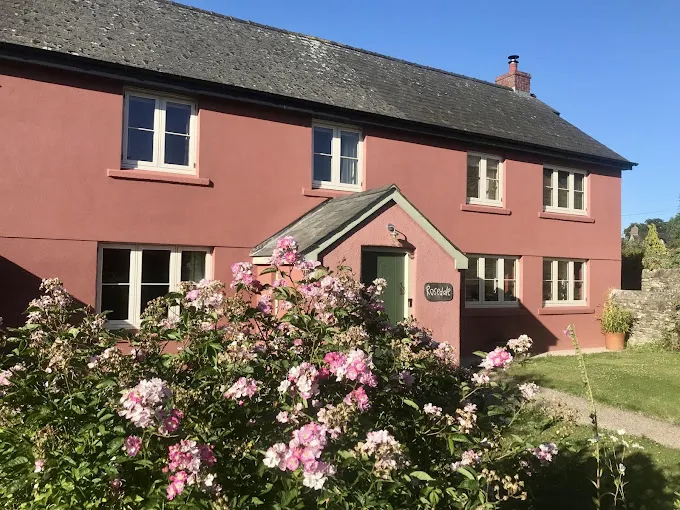
EWI Specialists South Wales: Complete Guide

EWI specialists South Wales provide expert external wall insulation systems that improve energy efficiency and weather protection for solid-wall properties across the region – here is everything you need to know.
Table of Contents
- What Is External Wall Insulation?
- Why EWI Matters for Welsh Properties
- Choosing EWI Specialists in South Wales
- The EWI Installation Process Explained
- Frequently Asked Questions
- EWI Systems Compared
- Coloured Rendering South Wales: EWI Specialists
- Practical Tips for Your EWI Project
- The Bottom Line
- Sources & Citations
Article Snapshot
EWI specialists South Wales are certified installers who fix insulation boards to external walls and apply a weather-resistant render finish. With 25% of Welsh dwellings having solid wall construction, EWI is one of the most effective upgrades available – improving thermal performance, reducing heating costs, and protecting against Welsh weather.
EWI Specialists South Wales in Context
- 25% of dwellings in Wales have solid wall construction, making them prime candidates for EWI (Welsh Government, 2019)[1]
- 4.4 million square metres of EWI were installed across the UK in 2024 (INCA, 2025)[2]
- Peak UK EWI installations reached 50,000 per annum in 2014 (BEIS Government Report, 2017)[3]
- 11% of Welsh dwellings have narrow cavity construction that also benefits from external insulation solutions (Welsh Government, 2019)[1]
What Is External Wall Insulation?
EWI specialists South Wales install a complete layered system that bonds high-performance insulation boards to exterior walls, then applies a reinforced render finish over the top to create a weatherproof, energy-efficient building envelope. External wall insulation is the primary solution for solid-wall properties that cannot be upgraded through standard cavity-fill methods. Coloured Rendering South Wales has delivered EWI installations across Swansea, Cardiff, Newport, and surrounding areas since 1998, combining certified technical expertise with deep knowledge of local conditions.
The system works by wrapping the outside of a building in a continuous layer of insulation, eliminating cold bridging and dramatically reducing heat loss through the walls. Unlike internal insulation, external wall insulation does not reduce room sizes, does not require residents to move out during installation, and simultaneously renews the entire appearance of the property with a fresh rendered finish. This dual benefit – improved thermal performance and enhanced kerb appeal – makes EWI one of the most cost-effective whole-house upgrades available to South Wales homeowners.
A correctly specified EWI system comprises several layers: a polymer-modified adhesive mortar, the insulation board itself (expanded polystyrene or mineral wool), a reinforcing fibreglass mesh embedded in a base coat, and a final decorative render finish. Silicone renders are the most popular choice in Wales because of their water-repellent yet breathable properties, which are important in a climate defined by high rainfall, coastal salt air, and wind-driven moisture. Acrylic and through-coloured monocouche finishes are also used depending on the property’s aesthetic requirements and budget.
Call Us
The Choose The Perfect Facade, Renders & Paints guidance from Baumit outlines how different finish types perform under varying environmental conditions, providing a useful reference when specifying the right render for coastal or high-exposure locations.
Why EWI Matters for Welsh Properties
Wales has a higher proportion of solid-wall and thermally inefficient housing stock than many other parts of the UK, making external wall insulation particularly relevant for the region’s property owners. According to the Welsh Government, 25% of dwellings in Wales have solid wall construction (Welsh Government, 2019)[1], and a further 11% have narrow cavity construction that performs poorly by modern thermal standards (Welsh Government, 2019)[1]. These properties cannot benefit from standard cavity-fill insulation and require external or internal treatment instead.
The Welsh climate adds urgency to the issue. Swansea regularly records some of the highest annual rainfall figures in the UK, and coastal communities from Mumbles to Penarth face persistent salt-laden air that accelerates deterioration of unprotected external walls. A properly installed EWI system addresses both the thermal and weatherproofing challenges in a single intervention, protecting the wall structure from moisture penetration while dramatically reducing heat loss.
Welsh Government policy has actively supported EWI investment through programmes such as the Warm Homes programme, recognising that upgrading solid-wall properties is central to improving Wales’s housing stock and reducing fuel poverty. Properties with improved Energy Performance Certificate (EPC) ratings benefit from higher market valuations and, for landlords, compliance with tightening minimum energy efficiency standards. As the Welsh Government notes in its EWI Project Guide, “Installers registered with a Competent Person Scheme must follow certain rules and meet a range of minimum technical competency requirements” (Welsh Government, 2019)[1], reinforcing the importance of using accredited specialists rather than general builders for this work.
Solid Wall Challenges in South Wales
Pre-1940 housing in South Wales was predominantly built with solid stone or brick walls, at 225mm to 450mm thick. These walls provide no insulation value comparable to a modern cavity wall and allow significant heat transfer to the outside. In areas such as the Swansea Valley, Rhondda, and the older terraced streets of Cardiff and Newport, entire rows of Victorian and Edwardian properties share this characteristic, meaning that an EWI installation programme transforms not just individual homes but entire streetscapes. Whole-terrace approaches are particularly cost-effective because scaffolding, access, and materials are shared across multiple properties simultaneously.
Choosing EWI Specialists South Wales: What to Look For
Selecting qualified EWI specialists in South Wales requires attention to certification, system knowledge, and local experience – three factors that separate professional installers from unqualified tradespeople taking on work outside their competence. External wall insulation is a system product, not a simple trade skill, and its long-term performance depends entirely on correct specification, preparation, and installation by trained operatives.
The most important credential to look for is approval from a recognised Competent Person Scheme or manufacturer approval programme. The Energy Saving Trust states that “external wall insulation should be fitted by a specialist installer trained by an approved system designer” (Energy Saving Trust, 2018)[4]. In practice, this means looking for installers who hold approval from the manufacturer of the EWI system being used, as manufacturers such as Baumit run rigorous training and approval programmes that certify installers to install their specific products with the associated manufacturer warranty.
Beyond certification, local experience in South Wales is genuinely valuable rather than a marketing claim. Renders specified for inland English properties perform poorly on Swansea Bay seafront or on the exposed hillside terraces of the South Wales valleys. An EWI specialist familiar with Welsh conditions will specify insulation thickness, board fixings, and render finishes appropriate for the actual exposure conditions of your property, rather than applying a standard national specification.
Key Accreditations for EWI Specialists
When evaluating EWI contractors in South Wales, look for the following indicators of technical competence and accountability. Manufacturer approval is the baseline: approved installers from companies like Baumit, Weber, or Parex have passed product-specific training and are accountable to the manufacturer for correct installation. City & Guilds accreditation through the construction training framework confirms formal trade qualification. Membership of INCA (Insulated Render and Cladding Association), the trade association for the UK EWI industry, indicates commitment to industry standards and best practice. Public liability insurance and a clear written guarantee covering both labour and materials should be provided before any contract is signed.
The UK Building Regulations – Approved Documents set out the thermal performance requirements that EWI installations must meet, providing an independent reference point for specifying insulation thickness and system performance.
The EWI Installation Process Explained
A professional EWI installation follows a structured sequence of preparation, fixings, insulation, reinforcement, and finish – each stage dependent on the previous one being completed correctly before proceeding. Understanding this process helps property owners set realistic expectations for project duration, disruption, and the visual changes at each stage.
Preparation is the most critical and often most underestimated phase. The existing external wall must be assessed for structural integrity, moisture content, and surface adhesion. Any areas of damaged or hollow render must be removed and made good. Damp problems must be identified and resolved before the EWI system is applied, because encapsulating moisture within an insulated wall will cause accelerating damage to both the wall structure and the insulation system. Window and door reveals, verge details, and junctions with rooflines all require careful design before installation begins, as these are the locations where poorly specified EWI systems most commonly fail.
Insulation boards are then mechanically fixed and adhesive-bonded to the prepared wall surface. The combination of adhesive and mechanical fixings – purpose-designed plastic anchor plugs – ensures the boards remain secure even in high-wind conditions. Board joints are staggered to prevent continuous vertical lines that telegraph through the finished render. Around window and door openings, diagonal reinforcing patches are applied at corners to prevent stress cracking in the finished surface.
Render Application on EWI Systems
Once the insulation boards are fixed and the base coat with embedded fibreglass mesh has cured, the finish render coat is applied. Spray application, used by specialist contractors, delivers a faster and more consistent coverage than hand application – particularly valuable on large wall areas or multi-unit developments. The spray method ensures even thickness across the entire surface, reducing the risk of thin spots that compromise weather resistance or result in an uneven visual appearance.
Silicone renders are the preferred finish for EWI in South Wales because of their water-repellent properties, flexibility (which accommodates minor substrate movement without cracking), and self-cleaning characteristics that keep the finished surface looking clean despite the region’s persistent rainfall. Through-coloured systems eliminate the need for repainting, providing a low-maintenance solution well suited to both private homeowners and landlords managing multiple properties. Project timelines vary with property size and preparation requirements, but a standard three-bedroom semi-detached house takes between five and eight working days from start to completion.
Your Most Common Questions
How much does EWI cost for a typical South Wales property?
EWI costs vary considerably depending on property size, wall condition, chosen insulation thickness, and render finish. Research from UCL Energy Institute found average EWI installation costs of under £7,000 per property for up to 50% of properties in a Bristol social housing programme (UCL Energy Institute, 2017)[3]. For private residential properties in South Wales, costs depend on the amount of preparatory work required, the chosen insulation board thickness (60mm to 150mm depending on the target U-value), and whether a standard silicone render or a premium system such as Baumit StarTop is specified. The UCL research also identified that independent technical oversight adds £200-£300 per property (UCL Energy Institute, 2017)[3], a relatively small addition for the assurance it provides on a significant investment. The best approach is to obtain a detailed quotation from a certified installer who has physically assessed your property, as surface condition and accessibility both have a material effect on final cost.
Do I need planning permission for EWI in South Wales?
Most EWI installations on residential properties in Wales fall within permitted development rights, meaning planning permission is not required in most cases. However, there are important exceptions. Properties in Conservation Areas, Listed Buildings, and some Article 4 Direction areas require prior approval or full planning permission before EWI is installed. The additional wall thickness created by EWI (80mm to 200mm depending on insulation thickness) must also be considered in relation to boundary distances and party wall agreements on terraced or semi-detached properties. Always check with your local planning authority – whether that is Swansea Council, Cardiff Council, Newport City Council, or another Welsh local authority – before proceeding, particularly in older residential areas where conservation designations are common. A reputable EWI specialist will raise these questions during the initial consultation and help you secure the required approvals before any work begins.
How long does EWI last on a Welsh property?
A correctly specified and professionally installed EWI system is designed to last for decades. Manufacturer-backed warranties on systems such as Baumit StarTop extend to 10-25 years depending on the specific system chosen and the conditions of installation. However, product warranties are only as meaningful as the competence of the installer who fits them – manufacturers issue warranties only to approved applicators who have completed their training programme and who install the system in accordance with manufacturer guidelines. In real-world performance terms, silicone render finishes on EWI systems in coastal locations such as Mumbles, Porthcawl, and Barry Island show excellent durability against salt air and wind-driven rain when correctly specified for exposure conditions. The self-cleaning properties of silicone render are particularly valuable in Wales, where organic growth from persistent moisture disfigures uncoated surfaces. Regular light cleaning and prompt attention to any sealant failures around window and door frames will extend system lifespan beyond the warranty period.
Are there grants available for EWI in Wales?
Wales has historically offered more generous grant support for energy efficiency measures than England, reflecting the Welsh Government’s commitment to addressing fuel poverty and improving housing stock. The Warm Homes programme has provided funding for EWI in eligible households, focused on lower-income households and properties with the poorest energy performance ratings. Eligibility criteria, funding levels, and application processes change periodically, so checking directly with the Welsh Government’s energy efficiency programmes or speaking with an approved EWI installer is the best way to establish current availability. ECO4 (Energy Company Obligation), the UK-wide scheme requiring energy suppliers to fund insulation measures in eligible homes, also covers EWI and is accessible to qualifying households in South Wales regardless of Welsh Government schemes. Some local authorities in South Wales have also run area-based EWI schemes in collaboration with housing associations and energy companies, particularly in high-density terraced housing areas. An EWI specialist with experience in the Welsh market will be familiar with current grant availability and will advise during your initial consultation.
EWI Systems Compared
Not all external wall insulation systems perform equally in South Wales conditions. The choice of insulation board material and render finish both affect long-term performance, cost, and suitability for different property types. The following comparison summarises the four main EWI approaches used by specialists in the region.
| System Type | Insulation Material | Render Finish | Best For | Maintenance |
|---|---|---|---|---|
| Premium Silicone EWI | EPS or Mineral Wool | Silicone render (e.g. Baumit StarTop) | Coastal & high-exposure locations | Very low – self-cleaning |
| Acrylic Render EWI | EPS boards | Acrylic through-colour render | Inland residential properties | Low – no painting required |
| Monocouche EWI | EPS or insulating board | Through-colour cement render | Traditional property styles | Low – colour integral to render |
| Mineral Wool EWI | Mineral wool boards | Silicone or acrylic finish | Fire-risk or cavity-barrier properties[1] | Low – durable finish coat |
Coloured Rendering South Wales: Your Local EWI Specialists
Coloured Rendering South Wales has been delivering professional EWI installations and rendering services across Swansea, Cardiff, Newport, Bridgend, and the wider South Wales region since 1998. As a Baumit Approved EWI Applicator with City & Guilds Assured accreditation, we are certified to install Baumit StarTop premium silicone render and complete EWI systems carrying manufacturer-backed warranties of up to 25 years. This certification is not a marketing claim – it is a technical standard that commits us to correct installation practice on every project.
Our EWI Specialists South Wales service covers the full project lifecycle: initial property assessment and specification advice, full EWI system installation with spray-applied finish coats, and post-completion care guidance. We also provide Rendering Repairs South Wales for properties where existing render has deteriorated before the point of full replacement. For properties in Swansea specifically, our Coloured Rendering Swansea page details the full range of render options suited to Swansea’s coastal conditions.
“Geoff fitted External Wall Insulation to a wall that had a number of issues and through which a lot of heat was being lost. Geoff is very tidy, he talked us through it at every stage and was very respectful of our neighbours whilst working in their property. Great job!” – Abby Harries-Heat, Google Review
“We’re 100% happy and wouldn’t hesitate to recommend Jeff. His workmanship is excellent and we’re also very happy with the product he recommended to eradicate the penetrating damp and give our house a great new look and lease of life.” – Alistair Legge, Google Review
To discuss your property and receive a free, no-obligation quote, contact us on 07815 868070 or email geoff@colouredrenderingsouthwales.com. You can also use our contact form for a free quote or consultation on your rendering project.
Practical Tips for Your EWI Project in South Wales
Preparation and planning before you appoint an EWI contractor will save time, money, and frustration. The following guidance draws on the realities of EWI installation in South Wales’s specific conditions.
Address damp before installation. EWI will not cure rising damp or active water ingress – it will conceal it temporarily and accelerate damage. Any source of moisture entering the wall from below or through defective flashings must be resolved before insulation boards are fixed. Ask your installer to assess moisture levels with a meter reading during the survey visit.
Specify for your location’s exposure level. Properties within two kilometres of the South Wales coast face significantly higher salt air and wind-driven moisture exposure than inland properties. A silicone render system is the appropriate choice for coastal exposure; acrylic renders are acceptable for sheltered inland locations. Do not accept a single specification offered for all property types without an exposure-level assessment.
Plan window and door reveals carefully. EWI adds 80-200mm to your external wall thickness. Existing window sills, lintels, and reveal depths require extension. Discuss these details with your installer before work starts – late-stage changes to reveals add cost and delay.
Consider scaffolding shared with neighbours. On Victorian and Edwardian terraces common in Swansea, Neath, Pontypridd, and the valleys, coordinating EWI across two or more properties simultaneously reduces scaffolding costs significantly. A single scaffold structure serves two or three terraced houses, with each owner sharing the access cost.
Check grant eligibility before committing to full private funding. Welsh Government and ECO4 funding substantially reduces the cost for qualifying households. Even if you do not expect to be eligible, a brief check with your EWI installer or the Welsh Government’s energy helpline takes minimal time and reveals available support you were unaware of.
The Bottom Line
EWI specialists South Wales provide one of the most impactful upgrades available to Welsh property owners – combining meaningful reductions in heating costs with lasting weather protection and improved property appearance in a single installation. With 25% of Welsh dwellings having solid wall construction and 4.4 million square metres of EWI installed across the UK in 2024 alone, the case for external wall insulation is well established and supported by decades of real-world performance data.
The key to a successful outcome is choosing a certified, locally experienced specialist who understands Welsh exposure conditions, specifies the right system for your property, and delivers installation in strict accordance with manufacturer guidelines. Coloured Rendering South Wales carries Baumit Approved EWI Applicator status with City & Guilds Assured accreditation, backed by over 25 years of experience across South Wales and a maintained 5.0 Google rating. Call us on 07815 868070 or email geoff@colouredrenderingsouthwales.com to arrange a free property assessment and quotation.
Sources & Citations
- External Wall Insulation (EWI) Project Guide. Welsh Government, 2019.
https://www.gov.wales/sites/default/files/publications/2019-04/external-wall-insulation-project-guide.pdf - INCA Survey Reveals Size Of The UK EWI Industry. INCA (Insulated Render and Cladding Association), 2025.
https://www.inca-ltd.org.uk - Understanding Best Practice in Deploying External Solid-Wall Insulation. UCL Energy Institute / BEIS, 2017.
https://assets.publishing.service.gov.uk/media/5a82151840f0b6230269abd7/UCL-EWI-2017.pdf - External Solid Wall Insulation Leaflet. Energy Saving Trust / Welsh Government, 2018.
https://www.gov.wales/sites/default/files/publications/2018-09/external-solid-wall-insultation.pdf
