
External Wall Insulation South Wales Guide
External wall insulation south wales homeowners need covers everything from system selection and cost to energy savings and certified installation – this guide explains every step clearly.
Table of Contents
- What Is External Wall Insulation and Why Does It Matter?
- External Wall Insulation South Wales: Local Climate and Housing Challenges
- EWI Systems Explained: Choosing the Right Option
- The Installation Process and What to Expect
- Frequently Asked Questions
- Comparing EWI Approaches
- How Coloured Rendering South Wales Can Help
- Practical Tips for EWI Projects
- The Bottom Line
- Sources & Citations
Article Snapshot
External wall insulation south wales is a system of insulation boards fixed to external walls and finished with a protective render coat. It reduces heat loss through solid and cavity walls, lowers energy bills, improves EPC ratings, and delivers a fresh rendered finish – all in a single installation.
External Wall Insulation South Wales in Context
- Only 10% of UK homes with solid walls currently have solid wall insulation (Department for Energy Security and Net Zero, 2025)[1]
- 80% of solid walls in Wales remain uninsulated (Which?, 2025)[2]
- 75% of cavity wall homes in Wales have cavity wall insulation, yet 33% of cavity walls across Wales remain uninsulated (Department for Energy Security and Net Zero, 2025; Which?, 2025)[1][2]
- Solid wall insulation saves householders around £445 a year on energy bills (Energy Saving Trust via Welsh Government, 2018)[3]
What Is External Wall Insulation and Why Does It Matter?
External wall insulation south wales installations involve attaching rigid insulation boards – typically expanded polystyrene (EPS), mineral wool, or phenolic foam – directly to the outer face of a building’s walls, then covering them with a reinforced render system. The result is a continuous thermal envelope that dramatically reduces the rate at which heat escapes through walls. For the roughly 80% of solid walls in Wales that currently have no insulation at all (Which?, 2025)[2], EWI is often the only practical retrofit option available.
Unlike cavity wall insulation, which fills the void between two skins of brick, EWI works on both solid and cavity walls. It does not require drilling into existing masonry or pumping materials inside the wall structure. The insulation sits on the outside, protecting the original wall from temperature fluctuations, freeze-thaw cycles, and moisture penetration simultaneously. This external position also eliminates cold bridges at floor joists and window lintels – points that cavity fill alone cannot address.
The thermal improvement is measurable and significant. According to TheGreenAge Team, energy efficiency consultants, “90mm of EPS attached to a traditional 9-inch solid brick, will reduce the U-value from 2.2 down to just 0.3 per m²K, bringing it very close to the standards of a newly constructed wall. As a result, you can expect energy savings of up to 40%.” (TheGreenAge, 2025)[4]
Call Us
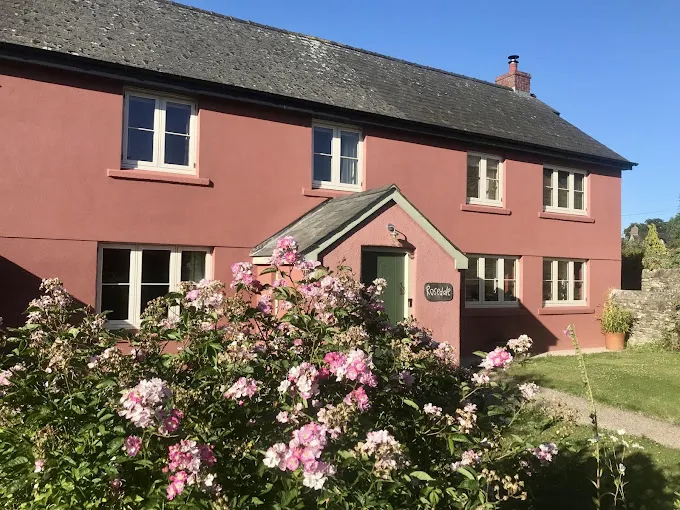
Beyond energy performance, EWI delivers a fully renewed external appearance. Once the render finish is applied over the insulation boards, the building looks as though it has been newly built. For older terraced houses, Victorian semis, and 1960s-1980s concrete panel buildings – all common across South Wales – this transformation is substantial. Coloured Rendering South Wales specialises in exactly this combination: certified EWI installation paired with professional spray-applied render finishes that protect and beautify properties throughout the region.
The energy bill savings are equally compelling. The Energy Saving Trust states that “external wall insulation offers householders a sustainable solution to reducing their energy needs, carbon footprint and fuel bills. Depending on the type of solid wall insulation, householders save around £445 a year.” (Energy Saving Trust via Welsh Government, 2018)[3] Over a 25-year system lifespan, that saving accumulates to over £11,000 – well in excess of typical installation costs for a semi-detached house.
External Wall Insulation South Wales: Local Climate and Housing Challenges
South Wales presents a specific set of environmental conditions that make external wall insulation both more necessary and more technically demanding than in drier parts of the UK. The region experiences high annual rainfall, persistent westerly winds driving rain against exposed facades, and coastal salt air in areas from Mumbles and the Gower through to Barry and Penarth. These conditions accelerate the deterioration of untreated or poorly maintained external walls and make the breathability and water resistance of any applied render system important.
TheGreenAge Team note that “South Wales is particularly susceptible to cavity wall insulation failure because of its characteristically wet weather.” (TheGreenAge, 2025)[4] This observation applies equally to the external render finish applied over EWI boards. A standard acrylic or cement render that performs adequately in the English Midlands absorbs moisture and develops cracks when subjected to the sustained driving rain of a Welsh winter. Silicone render systems, by contrast, are hydrophobic – they repel water while remaining vapour permeable, allowing any moisture within the wall to escape without saturating the insulation layer beneath.
The housing stock across South Wales also creates particular demand for EWI. The Valleys communities north of Cardiff, Swansea, and Newport contain large numbers of solid-wall Victorian and Edwardian terraced houses that were built without cavity walls. Which? research identifies that “priority places for insulation are distributed throughout Wales, but are more commonly found in South Wales (primarily the Valleys and the city centres of major cities like Cardiff and Swansea).” (Which?, 2025)[2] These solid-wall properties cannot benefit from conventional cavity fill and represent the largest opportunity for EWI in the region.
Coastal exposure adds a further layer of specification complexity. Salt-laden air is corrosive to some render formulations and accelerates surface breakdown. For properties in exposed coastal locations – seafront homes in Mumbles, Porthcawl, or Tenby, for example – render systems must be rated for Zone 5 or Zone 6 exposure under BS 8104, the British Standard for assessing wind-driven rain. Selecting an EWI system without accounting for local exposure zones is one of the most common causes of premature render failure on South Wales properties.
Understanding these regional factors is why local expertise matters when specifying EWI. A contractor familiar with South Wales micro-climates specifies systems appropriate to each location, rather than applying a one-size-fits-all approach drawn from national guidance written primarily for less exposed regions.
EWI for Solid Wall Properties in South Wales
Solid wall properties – those built before approximately 1920 without a cavity – account for a disproportionate share of poor EPC ratings across South Wales. Because heat loss through an uninsulated solid brick wall is four to five times greater than through a modern insulated cavity wall, these properties are the most responsive to EWI. Even a relatively modest 60mm of EPS insulation board cuts wall heat loss by more than 60%, with thicker boards achieving the near-Passivhaus U-values referenced above. For homeowners in the South Wales Valleys dealing with older terraced stock, EWI combined with a silicone render finish represents the single most impactful fabric improvement available. Learn more about available EWI Specialists South Wales – expert external wall insulation installations for energy efficiency.
EWI Systems Explained: Choosing the Right Option
Selecting the correct EWI system depends on four factors: the wall type and construction, the target U-value, the exposure zone of the property, and the desired render finish. Understanding these variables allows property owners to make informed decisions rather than simply accepting the cheapest quote.
The most widely used insulation board material for South Wales residential properties is expanded polystyrene (EPS). It offers a good balance of thermal performance, cost, and compatibility with a wide range of render finishes. A 90mm EPS board achieves a finished U-value of around 0.3 W/m²K on a solid brick wall, meeting current Building Regulations Part L requirements for thermal elements in existing dwellings. EPS is also lightweight, which reduces the mechanical fixing loads on the original wall structure – an important consideration for older brickwork that is not in perfect condition.
Mineral wool boards are preferred where fire performance is a primary concern, particularly for buildings above 18 metres in height or where planning conditions require non-combustible materials. They offer similar thermal performance to EPS but at a higher cost and with greater sensitivity to moisture during installation. Phenolic foam boards achieve the highest thermal performance per millimetre, making them the preferred choice where wall thickness is constrained – for example, where a property is close to a boundary or where window reveals are very narrow.
The render finish applied over the EWI boards is as important as the insulation itself. A premium silicone render – such as the Baumit StarTop system installed by certified applicators – provides hydrophobic water resistance, vapour permeability, and self-cleaning properties that reduce maintenance over the system’s lifespan. Thin-coat silicone render is applied at 1.5-3mm thickness over a reinforced basecoat incorporating alkali-resistant fibreglass mesh. This mesh layer is important: it distributes stress across the render surface and prevents cracking at board joints. Through-coloured monocouche render is an alternative finish that suits properties requiring a more textured, traditional appearance. You can view finished examples at our Gallery – View examples of our high-quality spray rendering and repair work.
Acrylic render finishes are lower cost but less breathable than silicone, and they retain dirt more readily in the wet South Wales climate. For exposed coastal properties or those subject to significant rainfall, the additional investment in silicone render is justified by the extended maintenance-free service life – 20-25 years compared with 10-15 years for standard acrylic finishes.
Grants and Funding for EWI in Wales
Welsh Government funding programmes have historically supported external wall insulation for lower-income households and those in fuel poverty. The Warm Homes Programme – the successor to the Nest and Arbed schemes – has provided grant-funded EWI to eligible Welsh households, with priority given to solid-wall properties in areas of highest deprivation, many of which are in South Wales. Eligibility criteria change regularly, and the best approach is to check current availability through the Welsh Government’s energy efficiency helpline or through a registered installer. Even without grant support, the long-term energy bill savings and property value uplift from EWI mean the investment pays back within 8-15 years for a typical South Wales semi-detached house.
The Installation Process and What to Expect
A properly executed EWI installation follows a defined sequence of stages, each of which affects the long-term performance of the finished system. Understanding the process helps property owners manage expectations about timescales, disruption, and what quality workmanship looks like at each stage.
The first stage is a thorough survey of the existing wall. Any areas of loose, hollow, or crumbling render must be removed and made good before EWI boards are fixed. Existing coatings must be checked for adhesion. Damp problems, whether from rising damp, penetrating damp, or failed pointing, must be investigated and resolved before insulation is applied. Trapping moisture behind an EWI system accelerates deterioration of the original wall and reduces the thermal performance of the insulation.
Boards are fixed to the prepared wall using a combination of adhesive mortar and mechanical fixings – typically plastic-headed anchors that penetrate the original masonry to a specified depth. The number and pattern of fixings per board is determined by the exposure zone and the weight of the proposed render finish. In high-exposure coastal locations common in South Wales, more fixings per square metre are required than in sheltered inland positions. This is a detail that separates experienced EWI installers from those working without specific system training.
Once boards are in place, a reinforced basecoat is applied. The alkali-resistant fibreglass mesh is pressed into the wet basecoat and overlapped at all joints and corners. A second basecoat layer follows, creating a smooth, continuous reinforced surface ready to receive the finish render. Corner beads, stop beads around windows and doors, and movement joints are incorporated at this stage. The quality of this beadwork has a significant influence on the finished appearance, particularly around window reveals where poor detailing is highly visible.
The finish render – whether silicone, acrylic, or monocouche – is then applied to the primed basecoat. Spray application, as used by experienced rendering contractors, produces a more consistent texture and thickness than hand application, reduces the risk of lap marks, and significantly shortens the time the building is exposed to the elements during the rendering stage. A typical semi-detached house is rendered in one to two days using spray application, compared with three to five days by hand.
After completion, window sills, door surrounds, and any decorative features need to be reinstated or adjusted for the additional wall thickness. The average EWI system adds 80-150mm to external wall dimensions, which affects the reveal depth at windows and requires extension of window sills, vents, and external taps. A thorough EWI contractor will account for all these details in the quotation stage rather than presenting them as additional costs on completion.
Your Most Common Questions
Is external wall insulation suitable for all property types in South Wales?
External wall insulation is suitable for the vast majority of property types found across South Wales, including solid-wall Victorian and Edwardian terraced houses, 1930s semis, post-war housing association stock, and modern cavity wall properties. It is particularly valuable for solid-wall homes in the Valleys and in Swansea and Cardiff city centres, where cavity fill is not an option. There are some situations where EWI requires additional care: listed buildings and properties in conservation areas require planning permission, and you should always check with your local planning authority before proceeding. Properties with very ornate external features – bay windows, decorative brick coursing, or complex mouldings – require careful detailing to preserve the character of the building. EWI is not recommended for properties with significant unresolved damp issues, as insulating over an actively wet wall worsens structural moisture problems. A thorough pre-installation survey by a qualified contractor will identify any such concerns before work begins.
How much does external wall insulation cost in South Wales?
EWI costs in South Wales vary depending on the size of the property, the insulation board type and thickness, the render finish chosen, and the complexity of the installation. For a typical three-bedroom semi-detached house, installed costs range from £6,000 to £14,000, with silicone render finishes and thicker phenolic boards at the upper end of that range. Detached properties with larger floor plans will cost proportionally more. Grant funding through Welsh Government programmes such as the Warm Homes scheme reduces or eliminates costs for eligible households – it is always worth checking current grant availability before committing to the full cost. When evaluating quotes, check that they include all associated work: removal of existing render where necessary, addressing window reveals and sills, and reinstating external fittings. Quotes that appear significantly lower than the range above are likely omitting these elements or using lower-specification materials not suited to South Wales exposure conditions.
How long does external wall insulation last, and what maintenance does it need?
A correctly specified and installed EWI system lasts 25 to 40 years with minimal maintenance. Manufacturer-backed system warranties from suppliers such as Baumit cover 10 to 25 years depending on the specific products used and the certification status of the installer. Silicone render finishes are the most durable option in the South Wales climate: their hydrophobic surface sheds water rather than absorbing it, and their self-cleaning properties – activated by rainfall – keep the surface looking fresh with little intervention. Unlike painted cement render, silicone and through-coloured renders do not need repainting. Routine maintenance consists of visually inspecting sealant joints around windows and doors every three to five years and replacing any that show signs of cracking or detachment. Minor render repairs – hairline cracks at corners or around fixings – attended to quickly prevent water ingress behind the system. A reputable contractor will advise you on the specific maintenance requirements for your chosen system at project completion.
Will external wall insulation increase my property value?
EWI improves a property’s Energy Performance Certificate (EPC) rating by one to three bands, which has a measurable impact on market value and rental attractiveness. As minimum EPC standards for rental properties tighten under UK and Welsh Government policy, improving an E- or F-rated solid wall property to a C or D rating through EWI directly increases its lettable status and rental value. For sale properties, estate agents across South Wales report that buyers factor EPC ratings into offers, particularly as energy costs remain a household budget concern. Beyond the EPC improvement, the fresh external render finish improves kerb appeal, which influences first impressions and sale price. The combination of lower running costs, improved appearance, and better EPC rating means EWI delivers financial return through multiple channels simultaneously. The energy bill savings – potentially £445 per year or more – represent a direct financial benefit to the occupier from the day of installation.
Comparing EWI Approaches
Not all external wall insulation systems deliver the same performance or longevity, particularly in the challenging South Wales climate. The comparison below covers the four main approaches property owners in the region are likely to encounter, highlighting where each performs best and where limitations apply.
| EWI Approach | Best For | Render Finish | Lifespan (Years) | South Wales Suitability |
|---|---|---|---|---|
| EPS Board + Silicone Render | Solid wall houses, coastal properties | Thin-coat silicone (e.g. Baumit StarTop) | 25-40 | Excellent – hydrophobic, breathable, self-cleaning |
| EPS Board + Acrylic Render | Sheltered inland properties, budget projects | Acrylic thin-coat | 10-15 | Moderate – less suitable for exposed or coastal sites |
| Mineral Wool Board + Silicone Render | High-rise buildings, fire-rated zones | Thin-coat silicone or monocouche | 25-35 | Good – non-combustible, moisture-sensitive during install |
| Phenolic Foam Board + Silicone Render | Narrow reveals, constrained properties | Thin-coat silicone | 25-35 | Good – maximum thermal gain per mm, higher cost |
For most South Wales residential properties, the EPS board combined with a premium silicone render – particularly a certified system such as Baumit StarTop applied by an approved installer – represents the most reliable balance of thermal performance, weather resistance, and long-term value. Acrylic render is a reasonable option for sheltered inland sites where budget is a primary constraint, but it is rarely the right choice for the exposed coastal and high-rainfall locations that characterise much of the South Wales coastline.
How Coloured Rendering South Wales Can Help
Coloured Rendering South Wales has been delivering external rendering and EWI solutions across South Wales since 1998. With over 25 years of hands-on experience in the region, we understand the specific demands that Welsh weather and local housing stock place on rendering systems – and we specify accordingly.
We are a Baumit Approved EWI Applicator with City & Guilds Assured accreditation, which means we are certified to install the Baumit StarTop premium silicone render and full EWI systems with manufacturer-backed warranties of up to 25 years. This is not a self-declared quality claim – it is a documented certification that gives you confidence in both the materials and the installation standards applied to your property.
Our EWI installations combine insulation board supply and fixing, reinforced basecoat application, and spray-applied silicone render finish in a single, managed process. Spray application means faster project completion with a more consistent finish than hand application – a benefit that reduces disruption to your household and produces a result that is visually uniform across the entire elevation.
“We’re 100% happy and wouldn’t hesitate to recommend Jeff. His workmanship is excellent and we’re also very happy with the product he recommended to eradicate the penetrating damp and give our house a great new look and lease of life.” – Alistair Legge, Google Review
“Geoff fitted External Wall Insulation to a wall that had a number of issues and through which a lot of heat was being lost. Geoff is very tidy, he talked us through it at every stage and was very respectful of our neighbours whilst working in their property. Great job!” – Abby Harries-Heat, Google Review
We cover residential and commercial projects across the region, from Swansea and the Gower through to Cardiff, Newport, Bridgend, and beyond. Whether you need a full EWI system on a solid-wall Victorian terrace, a silicone render refresh on an existing insulated property, or specialist Rendering Repairs South Wales – professional repairs and maintenance for external wall renders, our team provides clear, honest advice and a free initial assessment. Contact us on 07815 868070 or email geoff@colouredrenderingsouthwales.com to arrange your consultation. You can also use our Contact Coloured Rendering South Wales for a free quote or consultation on your rendering project page to get in touch online.
Practical Tips for EWI Projects
Planning an external wall insulation project in South Wales requires more preparation than many homeowners expect. The following guidance will help you get the best outcome from your investment.
Commission a pre-installation survey first. Before agreeing to any system or obtaining final quotes, have a qualified installer survey the existing wall. They should assess render condition, look for signs of dampness, check pointing quality, and confirm that the substrate is sound enough to accept mechanical fixings. Any remediation work identified at this stage should be priced and completed before EWI boards are installed.
Check planning requirements early. Most EWI installations on houses fall within permitted development rights and do not require planning permission. However, properties in conservation areas, listed buildings, and flats in converted houses require consent. Check with your local planning authority – Swansea Council, Cardiff Council, or the relevant authority – before proceeding. Applying for consent adds time to the project programme and should be factored into your schedule.
Specify for your exposure zone. South Wales falls within exposure zones 3 to 5 under BS 8104, with coastal and hilltop locations in zone 5. Ask your contractor which exposure zone applies to your specific property and confirm that the specified render system is rated for that zone. This single question will tell you a great deal about the contractor’s technical knowledge.
Verify installer certification. For EWI systems carrying manufacturer warranties, the installer must be certified by the system supplier. Ask to see the installer’s certification documentation before work begins. A Choose The Perfect Facade, Renders & Paints guide from Baumit explains what to look for in a quality render specification.
Consider the window reveal depth. EWI adds 80-150mm to external wall thickness. Check whether your window sills are wide enough to accommodate the additional depth, and confirm that the contractor’s quote includes any necessary sill extensions or reveal boards. Overlooked reveal work is a common source of disputes and water ingress on EWI projects.
Ask about grant eligibility before committing. Welsh Government energy efficiency programmes change frequently. A quick eligibility check – based on your postcode, household income, and property EPC rating – takes minutes and reduces your out-of-pocket cost. Certified EWI installers are well-placed to advise on current scheme availability.
The Bottom Line
External wall insulation south wales homeowners choose is one of the most impactful home improvements available – particularly for the tens of thousands of solid-wall Victorian and Edwardian properties across Swansea, Cardiff, Newport, and the Valleys that currently lose heat at four to five times the rate of a modern insulated wall. With 80% of solid walls in Wales still uninsulated (Which?, 2025)[2], the opportunity for meaningful energy savings and property improvement is substantial.
Choosing the right system for South Wales conditions means prioritising breathable, hydrophobic silicone render finishes rated for high-exposure zones, working with certified installers who understand local climate demands, and ensuring the installation is backed by documented manufacturer warranties. The energy savings, EPC improvements, fresh rendered appearance, and long-term reduction in maintenance costs make EWI a sound investment for most eligible properties.
To discuss your property’s suitability and get a free no-obligation quotation, call Coloured Rendering South Wales on 07815 868070 or email geoff@colouredrenderingsouthwales.com today.
Sources & Citations
- HEE Stats Detailed Release March 2025. Department for Energy Security and Net Zero.
https://assets.publishing.service.gov.uk/media/67e511c9d052ace7e89776ed/HEE_Stats_Detailed_Release_-_Mar_25.pdf - Priority Places for Insulation: Mapping Wales’ Home Insulation Needs. Which?.
https://www.which.co.uk/policy-and-insight/article/priority-places-for-insulation-mapping-wales-home-insulation-needs-alNMJ5m3FT93 - External Solid Wall Insulation. Energy Saving Trust via Welsh Government.
https://www.gov.wales/sites/default/files/publications/2018-09/external-solid-wall-insultation.pdf - External Wall Insulation in South Wales. TheGreenAge.
https://www.thegreenage.co.uk/external-wall-insulation-in-south-wales/